


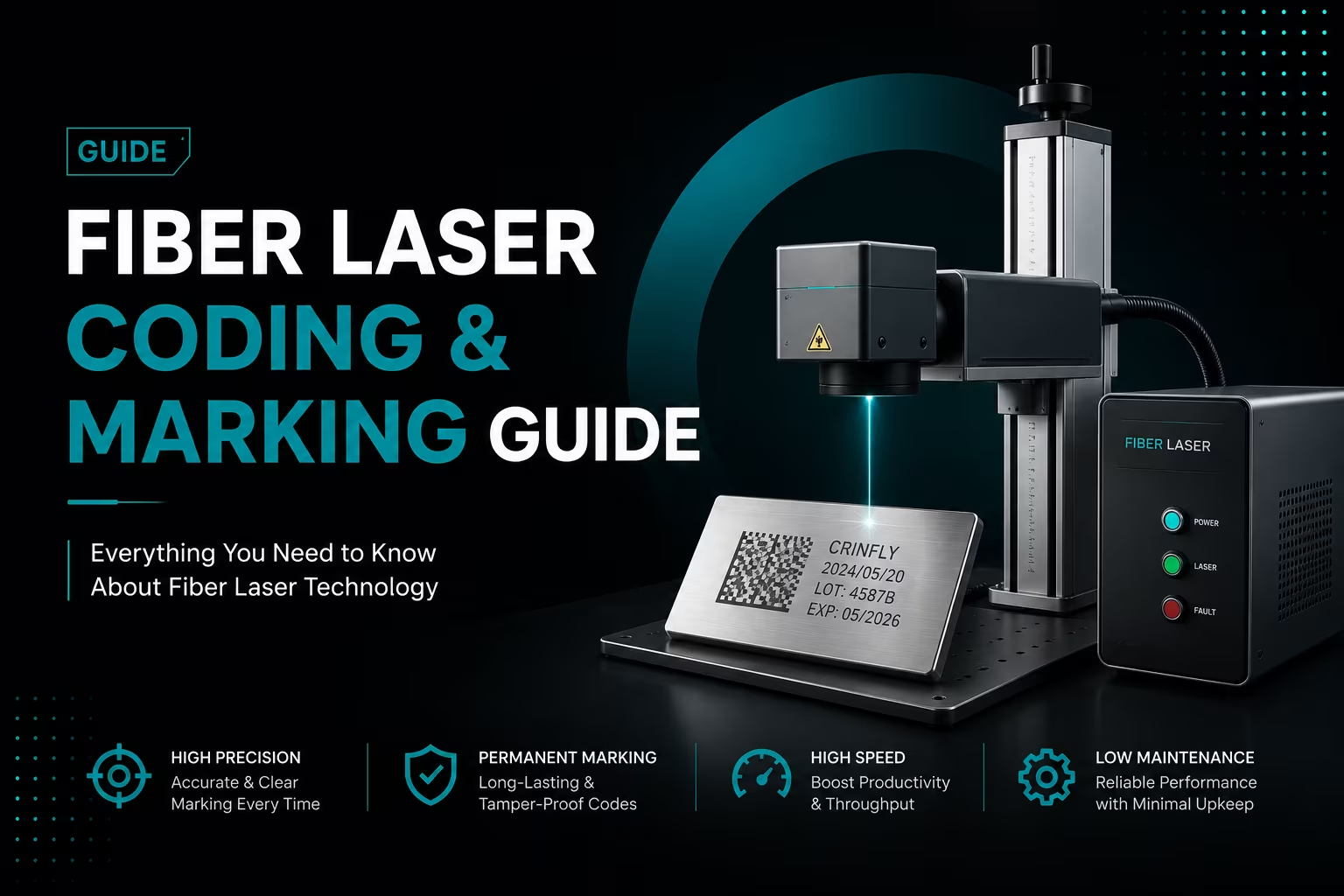
Fiber Laser Coding and Marking: The Sustainable Alternative to Inkjet
This guide covers Fiber Laser Coding and Marking as part of our The Ultimate Guide to Packaging Machinery Automation: The 2025 Strategic Playbook series. For complete strategic context, refer to the main pillar guide.
Data-driven automation has become the primary driver of profitability in the global Packaging sector, with automated systems delivering up to 50% higher OEE compared to manual alternatives.
What Is Fiber Laser Coding and Marking?
Fiber Laser Coding and Marking is a sophisticated industrial solution designed to standardize and accelerate the production cycle. It integrates precision engineering with digital control systems to minimize human error and maximize output consistency.
In the modern manufacturing landscape, Fiber Laser Coding and Marking represents a paradigm shift from 'labor-dependent' to 'system-driven' production, ensuring every unit meets exact quality specifications.
Why Fiber Laser Coding and Marking Matters Now
Three forces are currently converging on the industry, making the adoption of this technology an immediate necessity.
- Market Volatility - Consumers demand faster delivery and varied SKU sizes, which only flexible Fiber Laser Coding and Marking can provide.
- Labor Constraints - The difficulty in finding skilled operators has turned Fiber Laser Coding and Marking into a critical resilience strategy.
- Sustainability Mandates - Modern systems reduce material waste by 15-25%, aligning with global ESG targets.
How Fiber Laser Coding and Marking Works
The underlying mechanics involve high-speed synchronization between mechanical components and software logic.
Stage 1: Precision Input
Sensors detect incoming product flow and synchronize the feed rate to prevent jams.
Stage 2: Execution Phase
The core mechanical action—whether filling, sealing, or stacking—is performed with sub-millimeter accuracy.
Stage 3: Verification and Discharge
Integrated vision systems or weight checkers verify the output before discharging it to the next phase.
Options and Categories within Fiber Laser Coding and Marking
Different operational needs require specific configurations of this technology.
Entry-Level Automated Units
Designed for SMEs looking to automate a single bottleneck. High ROI for low-volume, high-mix production.
High-Speed Continuous Systems
Engineered for 24/7 operations in the beverage or food sectors, maximizing throughput with minimal downtime.
Modular Integrated Solutions
Can be expanded with additional modules as production requirements grow, protecting the initial capital investment.
Cost and Value Analysis
Investing in {topic_name} requires a calculated view of long-term efficiency versus upfront CAPEX.
| Component/Factor | Typical Range / Expectation | Business Impact |
|---|---|---|
| Initial Equipment Cost | $25,000 - $150,000 | Capital asset with 5-10 year lifespan. |
| Operational Waste Reduction | 18-25% improvement | Direct reduction in material COGS. |
| Throughput Increase | 2x - 5x vs Manual | Increased revenue capacity per square foot. |
The average payback period for Mach Crinfly solutions typically falls between 14 and 24 months, depending on shift frequency.
Who Should Prioritise Fiber Laser Coding and Marking?
- FMCG Manufacturers - To handle high-volume pouch and carton demand.
- Pharmaceutical Labs - Where precision and zero-contamination are non-negotiable.
- Contract Packagers - To improve margins on thin-spread service contracts.
Best Practices and Standards
Success depends on adhering to CE or UL standards for safety and ensuring all Fiber Laser Coding and Marking equipment is integrated with a centralized monitoring system for real-time OEE tracking.
The Foundation for Success
Before deployment, a facility must ensure a stable power supply, dry compressed air lines, and a basic digital literacy among the floor management team to handle Fiber Laser Coding and Marking interfaces.
Implementation Roadmap for Fiber Laser Coding and Marking
Phase 1: Assessment (Months 1-2)
Mapping existing floor workflows and identifying the highest impact automation points.
Phase 2: Deployment (Months 3-6)
Installation, site acceptance testing, and operator training programs.
Phase 3: Optimization (Ongoing)
Reviewing performance data to fine-tune speeds and reduce cycle times.
Frequently Asked Questions
Is Fiber Laser Coding and Marking suitable for small batches?
Yes, modern modular units feature quick-changeover parts that allow for efficient small-batch production.
What is the maintenance schedule?
Typical systems require monthly lubrication and quarterly sensor calibrations to maintain peak accuracy.
Does it replace all manual labor?
It shifts labor from repetitive physical tasks to high-value supervision and quality control roles.
Can it integrate with my existing ERP?
Most industrial Fiber Laser Coding and Marking systems use standard protocols like OPC-UA for seamless data integration.
What is the expected lifespan?
With proper maintenance, high-quality industrial systems operate reliably for over 10-15 years.
Related Resources
For deeper context across this landscape, explore our related guides:
Conclusion
Fiber Laser Coding and Marking is no longer a luxury for elite manufacturers; it is a fundamental requirement for industrial competitiveness.
Mach Crinfly works with organizations to navigate and implement these solutions effectively. Whether you are in the planning stages or ready to scale, we provide the expertise required to succeed.
Contact Mach Crinfly today to schedule a consultation and build your strategic roadmap.


